
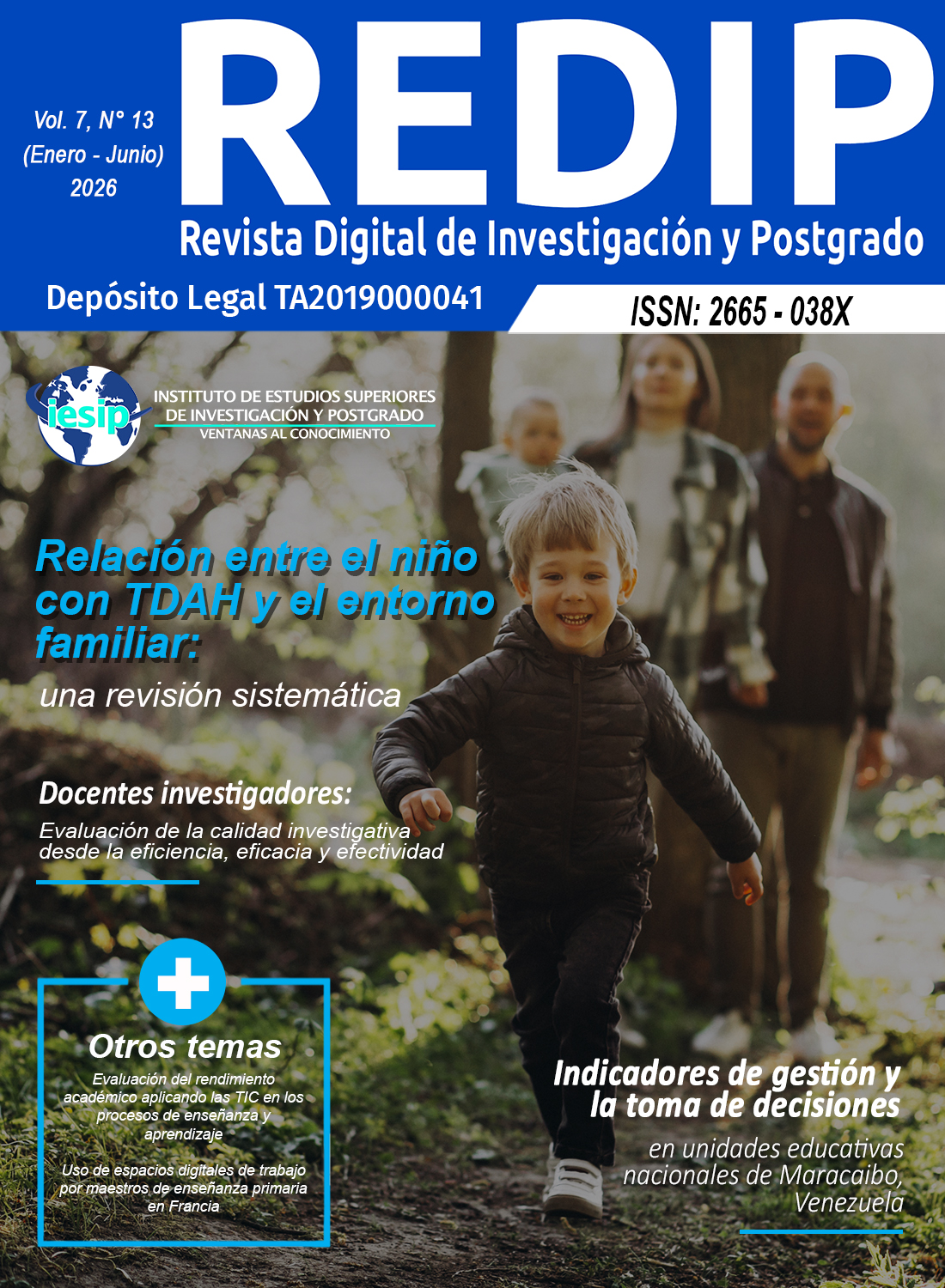
Relationship between the child with adhd and the family environment
A systematic review
DOI:
https://doi.org/10.59654/33k8a578Keywords:
ADHD, family, social relationships.Abstract
The present study focuses on understanding the possible interdependence between a ADHD diagnosis, the response to it among the family members, and how this bidirectionally affects the relationships, functioning and, ultimately, the mental health of all the cohabitants. The methodological design is that of a systematic review following the PRISMA protocol. The studies were analyzed using a qualitative approach based on an initial group of 143 works, of which ten were included in the final sample. The selected studies show a clear tendency towards experiencing negative emotionality, which leads to permissive and/or authoritarian parenting styles, resulting in an increased clinical symptomatology of the child affected by ADHD and acting as a cyclical influx of unwanted feelings and behaviors.
Downloads
References
Agha, S., Zammit, S., Thapar, A. & Langley, K. (2020). Parent psychopathology and neurocognitive functioning in children with ADHD. Journal of Attention Disorders, 24(7), 1836-1846. https://doi.org/10.1177/1087054717718262
Andrades, N., Gasca, E. & Úbeda, J. (2019). El impacto psicológico que genera el diagnóstico de TDAH en las familias de niños de entre 6 a 13 años. Siglo cero: revista española sobre discapacidad intelectual, 34(3), 19-33. https://doi.org/10.500.12743/1812
American Psychiatric Association. (2022). Manual diagnóstico y estadístico de los trastornos mentales (DSM-V-TR). https://doi.org/10.1176
Berenguer, C., Roselló, B. & Baixauli, B. (2019). Perfiles de familias con factores de riesgo y problemas comportamentales en niños con déficit de atención con hiperactividad. International. Journal of Developmental an Educational Psychology 2, 75-84. https://doi.org/10.17060
Castiblanco, L., Correa, R., López, M. & Usma, S. (2020). Influencia del núcleo familiar en la evolución negativa de los síntomas del trastorno por déficit de atención e hiperactividad (TDAH). Psicogente, 13(24), 274-291. https://doi.org/10.823/1999
De la Rosa, N. (2019). Impacto en la percepción familiar posterior a intervención psicoeducativa en familias de menores con diagnóstico de Trastorno por déficit de atención e hiperactividad (TDAH). Rev Ped Atención Prim, 3(2), 199-2016. https://doi.org/10.29035
D’Onofrio, B., & Emery, R. (2019). Parental divorce or separation and children’s mental health. Journal of the World Psychiatric Association (WPA), 18(8), 100–101. https://doi.org/10.1002
Fabra, S. (2021). Programa de intervención de educación respetuosa para familias con hijos con TDAH. Médica Panamericana, 7(1), 145-201. https://doi.org/10.4321
Freitas, R., Triguero, M., Nunes, C., Ribeiro, A., Roim, A. & Rodríguez, L. (2019). Parenting styles and mental health in parents of children with ADHD. Revista interamericana de psicología, 53(8), 417-430. https://doi.org/10.21315
Gómez, K. & Ortiz, D. (2019). Transformaciones en la relación parento-filial y constelación fraterna cuando hay niñas y niños diagnosticados con TDAH en algunas familias de la ciudad de Medellín y el Área Metropolitana. Revista argentina de clínica psicológica, 21(1), 45-51. https://doi.org/10.1016
González, R., Rodríguez, A. & Sánchez, J. (2022). Epidemiología del TDAH. Revista española de pediatría clínica e investigación, 7, 58-61. https://doi.org/156643
Insa, I. (2020). Análisis de la psicopatología parental de los niños con TDAH. Psicología clínica con niños y adolescentes, 9(3), 1-9. https://doi.org/2445/173629
Moher, D., Liberati, A., Tetzlaff, J. & Altman, D. (2009). Prisma Group. Reprint preferred reporting items for systematic reviews and meta-analyses: the PRISMA statement. Physical therapy, 89, 873-880. https://doi.org/10.1371
Morales, L. & Mosquera, Y. (2022). Caracterizar las estrategias de afrontamiento en la familia de un niño diagnosticado con Trastorno Déficit de Atención e Hiperactividad (TDAH) en la ciudad de Santiago de Cali. Journal of Developmental and Educational Psychology, 3(7), 75-84. https://doi.org/10.500
Orjales, I. (2019). Familia y TDAH: orientaciones para la intervención. Cuadernos de pedagogía, 8(5), 67-78. https://doi.org/10.1007
Patiño, I. & Martínez, A. (2020). Sistematización de experiencias en TDAH: Dinámica relacional, hábitos familiares disfuncionales y percepción del síntoma. Revista Criterios, 27(9), 11-43. https://doi.org/10.31948/
Quintero, D., Romero, E. & Hernández, J. (2021). Calidad de vida familiar y TDAH infantil. Perspectiva multidisciplinar desde la educación física y el trabajo social. Revista de Ciencias de la Actividad Física, 22, 1-3. https://doi.org/10.29035/rcaf.22.1.1
Romero, L. (2022). Estrés familiar y funciones ejecutivas en niños con TDAH de 8 a 12 años de un centro especializado de la ciudad de Cuenca-Ecuador. Revista U-Mores, 1(8), 9-24. https://doi.org/10.35290/ru.v1n2.2022.560
Segura, A. (2019). El TDAH, Trastorno por Déficit de Atención con Hiperactividad, en las clasificaciones diagnósticas actuales (CIE 10, DSM IV–R y CFTMEA–R 2000). Norte de Salud mental, 8(4), 30-40. https://doi.org/10.9181726
Stadelmann, S., Perren, S., Groeben, M. & von Klitzing, K. (2021). Parental separation and children's behavioral/emotional problems: the impact of parental representations and family conflict. Family process, 49(1), 92–108. https://doi.org/10.1111
Still, G. (2023). Some abnormal psychical conditions in children: a goulstonian lectures. Lancet, 1(10), 1008-1012. https://doi.org/10.1177/1087054706288114
Urbano, R., García, P. & Fernández, A. (2022). TDAH en la infancia, ¿cómo es su impacto en la dinámica familiar? Buscando respuestas en una revisión bibliográfica. Educadores y diversidad, 69(3), 9-21. https://doi.org/10.31766
Zambrano, E., Martínez, J., Sánchez, N., Dehesa, M., Vázquez, F., Sánchez, P. & Alfaro, A. (2020). Correlación entre los niveles de ansiedad en padres de niños con diagnóstico de ansiedad y TDAH, de acuerdo con el subtipo clínico. Investigación en Discapacidad, 7(3), 22-28. https://doi.org/10.45361
Zheng, Y. (2019). Hablando acerca de TDAH con los pacientes y sus familias. TDAH, 124(7), 8-13. http://doi.org/10.20453
Downloads
Published
Issue
Section
License
Copyright (c) 2026 Revista Digital de Investigación y Postgrado

This work is licensed under a Creative Commons Attribution-NonCommercial-ShareAlike 4.0 International License.
Esta licencia permite a los reutilizadores distribuir, remezclar, adaptar y desarrollar el material en cualquier medio o formato únicamente con fines no comerciales, y solo siempre que se atribuya al creador. Si remezclas, adaptas o construyes sobre el material, debes licenciar el material modificado bajo términos idénticos. CC BY-NC-SA incluye los siguientes elementos:
BY: se debe dar crédito al creador.
NC: Sólo se permiten usos no comerciales de la obra.
SA: Las adaptaciones deben compartirse en los mismos términos.